Digital
teaching
Can teachers be
replaced by technology in the future?
“Inspirational
teachers of the future will be intelligent machines rather than humans”
(Independent, 2017)
 Technology is growing and becoming more and more advanced
every day as well as the things we can do with it. We can communicate using
little icons of images such as emojis instead of using words. We can use our
phones to facetime one another where ever we are without the use of a laptop or
webcam. These days children are using and know how to use a phone or an Ipad
far younger than previous generations, they’re becoming more aware of technology
and what they can do with it. I certainly had no idea or had access to
technology outside of a classroom at primary school age. So, with the introduction of digital competence
within the new curriculum as Donaldson (2015) believes that there are a number
of issues, both practical and fundamental, with the current curriculum and
assessment arrangements in Wales, to support the growth of technology in
education, full participation in modern society and the workplace already
demands increasingly high levels of digital competence and that process can
only continue into a future that we cannot imagine. So, is it possible that the
future of education will no longer rely on teachers but on technology? That’s the
question I ask myself and you.
Technology is growing and becoming more and more advanced
every day as well as the things we can do with it. We can communicate using
little icons of images such as emojis instead of using words. We can use our
phones to facetime one another where ever we are without the use of a laptop or
webcam. These days children are using and know how to use a phone or an Ipad
far younger than previous generations, they’re becoming more aware of technology
and what they can do with it. I certainly had no idea or had access to
technology outside of a classroom at primary school age. So, with the introduction of digital competence
within the new curriculum as Donaldson (2015) believes that there are a number
of issues, both practical and fundamental, with the current curriculum and
assessment arrangements in Wales, to support the growth of technology in
education, full participation in modern society and the workplace already
demands increasingly high levels of digital competence and that process can
only continue into a future that we cannot imagine. So, is it possible that the
future of education will no longer rely on teachers but on technology? That’s the
question I ask myself and you.
According to Rowntree (1990) Computer assisted learning is
the medium of the future – and it always will be” … That future now seems to
have arrived.” These days children are able to complete and submit work directly
to their teachers from the comfort of their own home without having to print or
write it out on a piece of paper or in books to then hand it in as the teacher
can access it online and keep digital rather than paper copies. By doing this
it’s promoting and encouraging “E confident” learners. To me this is very beneficial
in terms of technology in education as if a child is sick and unable to attend
school they can still complete and keep up with the work so that they don’t fall
behind. Another benefit of technology within education is that you can directly
get in contact and allow parents to see what their child is doing in school in terms
of subjects and what they’re learning that current week. This allows parents to
have more of an insight and greater support as they can carry on helping and
educating their child about what they’re learning about outside of school.
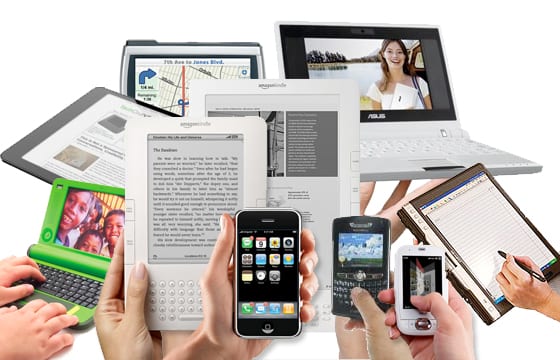 This contributes to the crucial debate about the future of
education and technology to whether robots will override and become the
teachers. Recently, much research evidence points to the possibility that
educational robots can help learners enhance their learning motivation and
improve their learning performance (Chung et al., 2010; Mitnik, Recabarren,
Nussbaum, & Soto, 2009). If robots were to be the teachers instead of real
life humans it would avoid having to have or pay teachers and support staff
within the work place so could it work out to be cheaper to have one robot to a
classroom instead of multiple support staff as well as the actual teacher? As
robots are engineered and wired to hold all kinds of information people may see
them as more beneficial than actual teachers as they should know more and be
able to educate children with more information and answer all possible
questions the children ask. Regardless, even without potential robot teachers,
children can already learn using different apps that can be downloaded and used
on phones, Ipads and even game consoles can be used educationally.
This contributes to the crucial debate about the future of
education and technology to whether robots will override and become the
teachers. Recently, much research evidence points to the possibility that
educational robots can help learners enhance their learning motivation and
improve their learning performance (Chung et al., 2010; Mitnik, Recabarren,
Nussbaum, & Soto, 2009). If robots were to be the teachers instead of real
life humans it would avoid having to have or pay teachers and support staff
within the work place so could it work out to be cheaper to have one robot to a
classroom instead of multiple support staff as well as the actual teacher? As
robots are engineered and wired to hold all kinds of information people may see
them as more beneficial than actual teachers as they should know more and be
able to educate children with more information and answer all possible
questions the children ask. Regardless, even without potential robot teachers,
children can already learn using different apps that can be downloaded and used
on phones, Ipads and even game consoles can be used educationally.
However, is it actually that beneficial to a child to be
taught by a wired and electronic robot with no emotions or feelings instead of
a real life human. Going back to the recent research evidence which points to the possibility that educational robots can help learners enhance their learning motivation and improve their learning performance (Chung et al., 2010; Mitnik, Recabarren, Nussbaum, & Soto, 2009). This makes me consider that actually, having a robot teach children may not be too beneficial to a
child’s confidence or performance. Children within schools usually build a strong relationship
with their teacher and reach a point where they feel confident to confide and
approach their teacher and surrounding support staff. Would having a robot as a
teacher lack this kind of relationship and empathy towards a child? According
to Sharkey and Sharkey (2010,2012) robots can affect the privacy of individuals
by collecting personal identifying information about them that can be accessed
by other people. This puts a child's identity and personal information at risk of potentially being accessed by members outside of the school which increases the danger of a child's protection. Some may argue that robots would work out cheaper as you wouldn’t
have to employ teachers or support staff to teach. However, I think that robots
would actually work out to be more expensive due to having to build and engineer the
robots in the first place as well as the repair costs in case of a malfunction to
a robot while teaching. If teaches were to teach behind the screen than degrees
like primary, secondary and other forms of teaching will be pointless and could
possibly become instinct in terms of studying it as a university course and degree. The reason
I chose to study this degree is to be able to teach children within a classroom environment
not behind a screen from my own home.
Do I think technology will take over teachers in future? Personally….
No. Why do I think this? I think this
because I don’t think education is prepared enough or worth risking one on one
tuition and real-life engagement of teaching children and allowing them to socialise with
adults and build not only relationships but role models too in a safe and educational environment. There’s far too
much risk of just relying purely on technology to teach children. As I said
before, robots lack emotion, passion and empathy, three things that to me are crucial
to teaching.
References:
Chun, H. (2012). ‘Designing a robot teaching assistant for
enhancing and sustaining learning motivation’, Interactive learning
environments Journal, pp. 156-171. Vol 21, 2013 - Issue 2: EDUTAINMENT 2011
CONFERENCE
Rowntree, D. (1990). Teaching Through Self-Instruction: How
to Develop Open Learning Materials (Revised Edition). Kogan Page/Nichols Publis
Sharky, C. (2016). ‘Should we welcome robot teachers?’,
Ethics and information Technology. Vol 18, Issue 4, pp. 283–297


Hi Jess, great post! You concluded that you do not think that technology will take over teachers in the future. I think a model known as the TPACK model would support this. In short, the model tells us that Content Knowledge, Technological Knowledge and Pedagogical Knowledge are all required to teach successfully. Technology alone does not have all these abilities, therefore will never outdo the traditional teacher.
ReplyDeleteBelow is a link to a website that explains the model in much more detail - it might interest you.
http://matt-koehler.com/tpack2/tpack-explained/
This comment has been removed by the author.
DeleteHi Lizzie, thank you for reading my blog and I hope you share a similar opinion to what I concluded. Also, thank you for sharing that link with me as it was very interesting. I particularly enjoyed reading more into the seven components of 'TPACK' and will definitely keep it in mind for future reference.
Delete